Alcohol · Category-wide
Is sake gluten-free?
Only if the bottle says premium: junmai, ginjo, daiginjo or honjozo. Unlabelled futsū-shu, the default restaurant pour, may contain gluten.
- Evidence
- BNational celiac organisation
- Last checked
- 2026-08-10
- Varies by country
- No
Source beyondceliac.org+2 more
Why
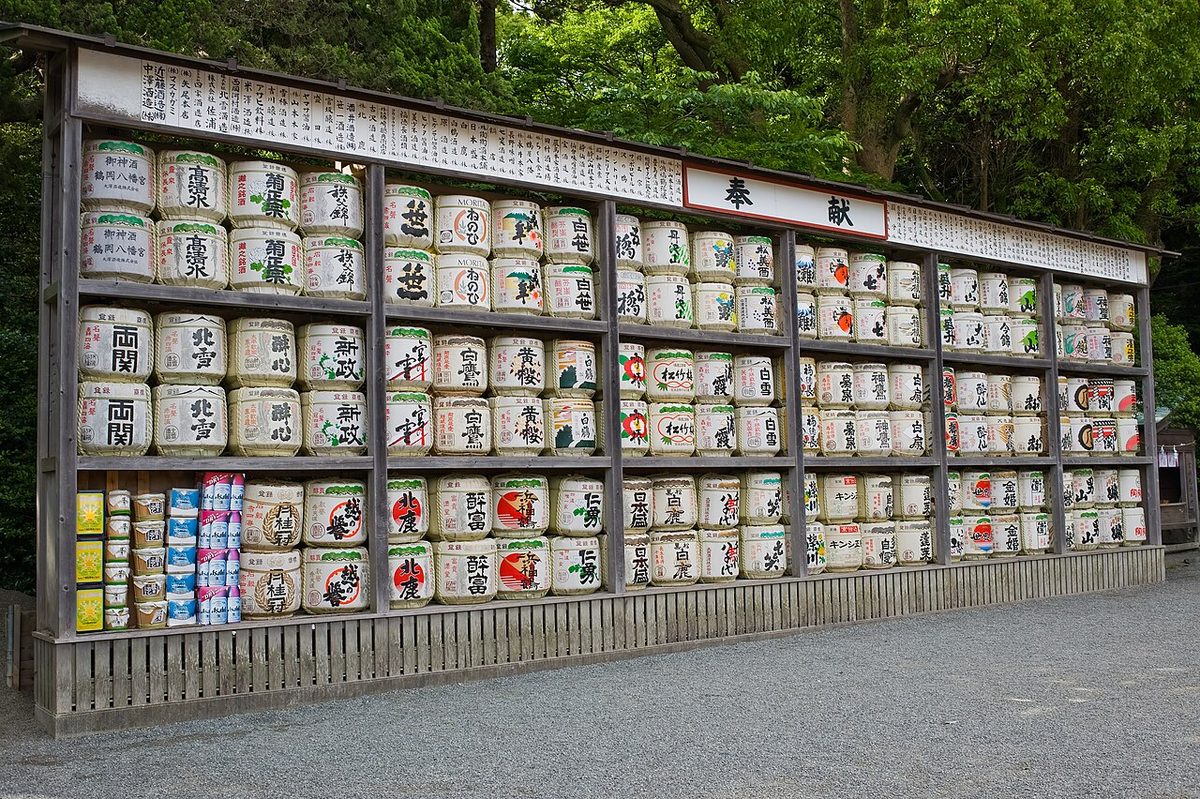
Sake is often called "rice wine," which undersells how it is actually made. It is brewed, closer to beer than wine, but the grain is rice, not barley. The gluten question is therefore not about the base at all. It is about what is legally allowed to be added afterwards, and that depends entirely on the grade.
The grade is the axis. Everything else on this page follows from it.
Japanese law splits sake into two worlds. Premium sake (tokutei meishōshu, the eight special designations), is defined by rice-polishing ratio and by a closed list of permitted ingredients. Non-premium sake (futsū-shu, literally "ordinary sake"), is everything else, and it is permitted additives, flavourings and blending agents that premium sake is not.
Beyond Celiac rules on exactly that split. Premium sake "is considered gluten-free, while non-premium sake is questionable and may not be gluten-free." Its stated reason is the additives: "many house sakes are not premium sakes and are filled with additives and flavorings sometimes containing gluten." And its stated instruction is to walk away: "If the bottle does not say 'premium sake' … leave it on the shelf to be safe."
This matters most in a restaurant, which is where most people drink sake. The house pour, the hot sake, the carafe that comes with the set menu and the convenience-store carton are overwhelmingly futsū-shu. That is the sake a restaurant serves you by default. Asking for a premium bottle by name is not fussiness here. It is the whole difference between the safe case and the unresolved one.
How to read the label
Look for one of these on the bottle. Any one of them means premium.
| On the label | Grade | Verdict |
|---|---|---|
| 純米 junmai / 特別純米 tokubetsu junmai | Premium, no added alcohol | Gluten-free |
| 純米吟醸 junmai ginjo / 純米大吟醸 junmai daiginjo | Premium, no added alcohol | Gluten-free |
| 吟醸 ginjo / 大吟醸 daiginjo | Premium, added distilled alcohol | Gluten-free |
| 本醸造 honjozo / 特別本醸造 tokubetsu honjozo | Premium, added distilled alcohol | Gluten-free |
| No grade named, or 普通酒 futsū-shu | Non-premium / "ordinary" | Leave it, additives are permitted and undeclared |
| Flavoured sake, sake-based liqueur, "sake cocktail" | Blended product | Check the flavouring, the sake is not the risk, the addition is |
If a bottle names no grade at all, treat it as futsū-shu. That is Beyond Celiac's own default and it is the right one: the absence of a designation is itself the answer.
Why the premium grades are clean. Polished rice, water, koji (rice inoculated with Aspergillus oryzae), and yeast. Koji does the job that malted barley does in beer, it converts starch into fermentable sugar. Sake achieves with mould what beer achieves with malt, which is exactly why it avoids the problem beer has.
The koji worry is misplaced, for sake specifically. Koji can be cultured on barley, and it is for some shochu and some miso. For sake it cannot: Japanese regulations require rice-based koji, and Beyond Celiac says the same, "sake makers are legally required to use only rice koji." If you have read that "koji can contain barley," that is true in general and not true of sake.
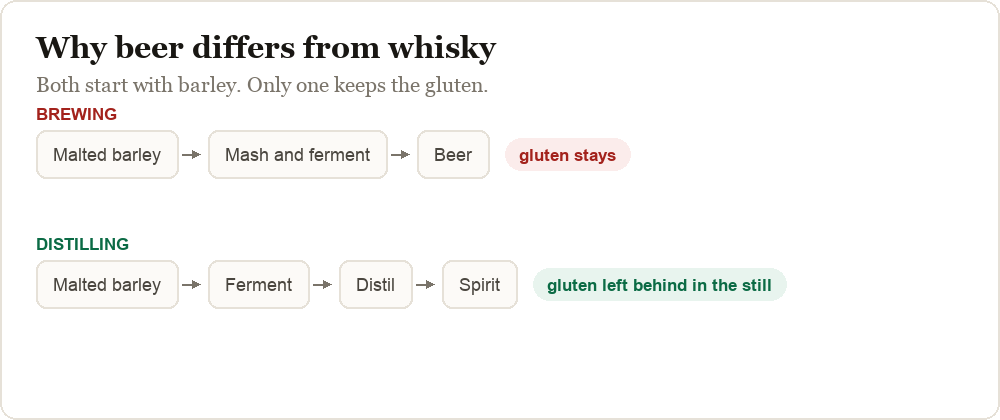
Added brewing alcohol is not the problem either. Everything outside the junmai designations (honjozo, ginjo, daiginjo), may have a small amount of distilled brewer's alcohol (jōzō alcohol) added before pressing, for aroma and stability. Distillation removes gluten proteins regardless of starting grain, and these are still premium grades with a closed ingredient list. Do not let the added alcohol push you away from a honjozo; the thing to avoid is the bottle with no grade on it at all.
How much risk is this?
Celiac disease: premium sake is a safe drink; non-premium sake is an unresolved one. Order by grade, not by "sake." Junmai has the shortest ingredient list in the category (rice, rice-koji and water, nothing added), and is the easiest thing to ask for by name. If the only option is the house pour and nobody can show you the bottle, treat it the way you would treat any unlabelled product and skip it. In a restaurant the food and the shared kitchen are a risk as well, not instead.
Non-celiac gluten sensitivity: no issue.
Wheat allergy: no wheat is involved at any stage.
Cross-contamination: minimal in the brewing process. If a sake has been aged in barrels that previously held something else, Japanese labelling convention is to say so on the bottle, worth a glance on unusual cask-aged bottlings.
What to have instead
The substitute for unlabelled sake is labelled sake. You are changing bottle, not drink:
- Junmai, junmai ginjo, junmai daiginjoThe cleanest choices and the direct replacement for a house pour. The ingredient line reads rice, rice-koji, water, and nothing else. Look for 純米 on the label.
- Honjozo, ginjo, daiginjoAlso premium, also safe. These have added distilled brewing alcohol, which does not carry gluten.
- Shochu, with one checkAvoidDistilled, so safe either way, but it is frequently made from barley (mugi shochu). Distillation handles it; if you prefer to avoid barley entirely at source, choose imo (sweet potato) or kome (rice) shochu.
- Umeshu (plum wine)Usually built on a distilled or sake base. Check flavoured versions.
- Wine, cider, tequila, rum, and corn or potato vodkaAll gluten-free.
Genuinely avoid: beer, obviously, and Japanese beers specifically, Asahi, Sapporo and Kirin are all barley-based and none are gluten-free. Also treat soy sauce as the real hazard of a Japanese meal: standard shoyu is brewed with roughly equal parts wheat and soybean. Ask for tamari.
Related questions
Is "saki" gluten-free? Same drink, "saki" is a common misspelling of sake. Same answer: premium yes, non-premium unresolved.
Is the sake at a Japanese restaurant gluten-free? Not by default. House sake, hot sake and the carafe with a set menu are almost always futsū-shu, the non-premium grade Beyond Celiac tells you to avoid. Ask which bottle it is poured from and order a named junmai or honjozo instead.
Is soju gluten-free? Usually, but not always. Modern mass-market soju is diluted distilled ethanol, commonly from rice, sweet potato or tapioca, and distillation removes gluten regardless. Some brands add wheat-derived ingredients post-distillation, so check flavoured varieties. Less clear-cut than sake.
Is mirin gluten-free? Hon-mirin (true mirin) is rice-based and gluten-free. "Aji-mirin" and mirin-style seasonings sold in Western supermarkets frequently contain added ingredients, read that label, it is a common kitchen slip-up.
Is rice vinegar gluten-free? Plain rice vinegar, yes. Seasoned rice vinegar sometimes isn't. Chinese black vinegar is often wheat-based.
Is sake safe at a sushi restaurant? A named premium bottle is. The house pour is not established. Separately, the soy sauce, the eel sauce, the tempura, the imitation crab and the shared fryer are all live risks, order a junmai and ask about everything else.
Is unfiltered nigori sake gluten-free? Nigori is simply sake that has been coarsely filtered so rice solids remain. It is a filtration style, not a grade. A nigori that is also junmai or ginjo is premium and safe. A nigori with no grade on the label is futsū-shu and gets the same answer as any other futsū-shu.
How we checked
| Source | Tier |
|---|---|
| Beyond Celiac, Is Sake Gluten-Free?, premium gluten-free, non-premium "questionable and may not be gluten-free"; "leave it on the shelf to be safe" | B |
| Japanese tokutei meishōshu classification rules, eight premium designations, rice-based koji required | C |
| Celiac.com, Brands of Gluten-Free Sake, commercial publisher, not a celiac organisation | D |
| Tippsy Sake, industry corroboration | D |
Overall source tier: B. Beyond Celiac has ruled on this category, and it ruled against a flat yes: premium sake is gluten-free, non-premium sake is not established. There is no manufacturer statement to have, because this is a category verdict, which is precisely why the grade printed on the bottle is the thing to act on.
Last verified: 10 August 2026. Producers reformulate without notice. On flavoured sake or futsū-shu, the label in your hand outranks this page.